
Rocket Rumble Maps
Tiled block arenas and Season 2 additions, described without invented map names.
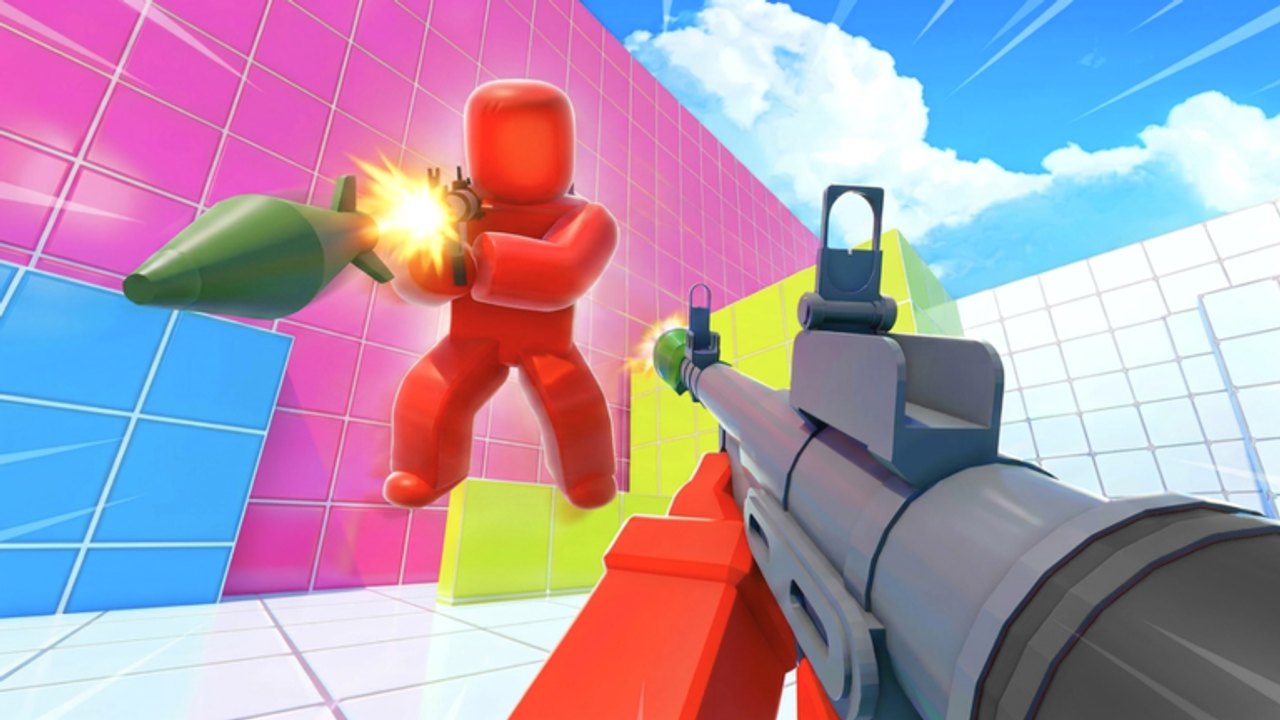
Rocket Rumble maps are colourful tiled block arenas. That is the visual fact this wiki will stand on. Headshot Games did not give us a public named atlas to copy, so this page does not invent map titles, callouts, or crate locations. You still need map sense. A rocket-only FPS in a six-player server is a geometry problem: splash around corners, height that turns a floor shot into a trap, and rooms so small that your own blast is the enemy.
The game launched on 31 March 2026. Season 2 in June 2026 added new maps alongside 1v1 duels and a battle pass. Old and new spaces share the same language: bright blocks, tiled floors, first-person yellow hands, green-warhead RPG. If a patch notes page lists a name later, Season 2 is where that belongs. Until then, learn to read the tiles.
What to look at in the first fifteen seconds
When you spawn, do not sprint down the brightest corridor. Look up. Height on these arenas is usually a block you can rocket-jump onto — a community technique of shooting your feet or a nearby surface, covered on rocket jump. A high tile lets you splash the floor fight. It also silhouettes you against the colourful skybox. Take height when it has a drop-off you can hide behind.
Look at corners. Tiled walls make splash predictable. A rocket at the base of a corner catches feet you cannot see. A rocket at a wall you are hugging catches you. The How to Play page is the combat version of that rule. Maps only add: compact rooms are self-damage boxes, open tile yards are third-party boxes.
Count the players you can hear. Free For All allows up to six. If the space is a small block courtyard, six rockets will stack. Play the edges. If the space is a longer tiled lane, the ends of the lane are safer than the middle. In 1v1 duels the same lane becomes an angle-holding problem instead of a crowd problem. Pick positions that match the mode, not a favourite colour block.
FFA density versus duel space
The same arena feels different at six players than at two. FFA is a score chase until the lobby kill target or match end. People rotate toward gunfire. If you win a fight in the open, assume another fighter is already walking to that splash. Relocate after every kill. Duels do not give you that third party, so you can hold a tile gap longer. Do not import FFA panic into a duel, and do not import duel camping into a six-player rumble.
Colour helps orientation even without names. Remember a bright wall, a repeating tile pattern, or a block tower as your reset. When you die, spawn and look for that landmark before you chase. Chasing through identical corridors is how you eat splash from someone who never moved.
Controls stay typical: WASD, mouse, jump, mobile tap-to-shoot on controls. Sensitivity that over-flicks will miss floor shots in tight tile rooms; use the sensitivity tool. Getting Started still applies: lobby first, then fights.
Lobby, economy, and why maps still matter for Coins
You pick up Coins by playing and finishing challenges, not by standing in a secret map corner this wiki will not invent. A Double Coins Boost makes those matches worth more. Codes (Bonus_Code, discord, Release) sit on the hexagonal lobby pad between the spin wheel and leaderboards; see codes and how to redeem. Cosmetics from crates, gloves, and loadouts change how you look on these tiles. They do not rename the arena.
Farm Coins is the grind loop. Better map reads farm more because you die less to your own splash. Rank badges can appear in the lobby; Bronze IV has been seen. Group rewards come from joining Headshot Games, not from a hidden map chest. Discord is in the game bio; keep it on the wiki Discord page. Scripts are not a map exploit guide.
Scout routine you can reuse on Season 2 spaces
Every time a new Season 2 arena loads, run the same thirty-second scout. Find one high block and one covered corner. Fire a single rocket at a far wall to measure splash on that tile size. Decide whether this space is a pile-up box (play edges in FFA) or a lane (hold angles in duels). Then play. Do not spend the match hunting a name for the map. Spend it not standing in the blast radius.
If you lose track of where you are, stop, look at the colour of the nearest large wall, and walk toward cover instead of toward the last kill. That habit transfers across every unnamed tiled arena this game will add. When Headshot Games publishes a real map list, this page can grow names. Until then, geometry beats fan-made callouts, and a six-player rocket rumble rewards the fighter who treated the blocks as splash math instead of as a tourist brochure.
Frequently Asked Questions
Quick answers for Rocket Rumble players.
What are the map names in Rocket Rumble?
This wiki does not invent map names. Arenas are colourful tiled block spaces. Season 2 added more of them; see Season 2.
How many players share a map?
Servers cap at six. Free For All uses that density. 1v1 duels use the same visual style with two fighters.
How should I read a new arena?
In the first seconds, find height, a covered corner, and whether the space is a tight box or a lane. Then play the mode you queued.
Does rocket jumping work on every map?
Players can boost off feet or nearby tiles as a community technique. Tight rooms make that a self-damage trap.
Do maps change Coin farming?
Indirectly. Better positioning dies less and finishes more challenges. The grind itself is on Farm Coins.